Français
 Nederlands
Gazette / Blog / Info
Maneki Neko, The Chinese lucky cat.
Mar
 Chinese superstitions and the lucky cat.
 Chinese superstitions and the lucky cat.
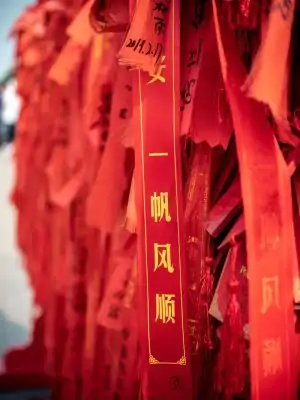
The Chinese are among the most superstitious people in the world. They hold countless beliefs meant to invite good fortune and keep misfortune at bay, from Feng Shui and lucky numbers to protective charms like the Maneki Neko.
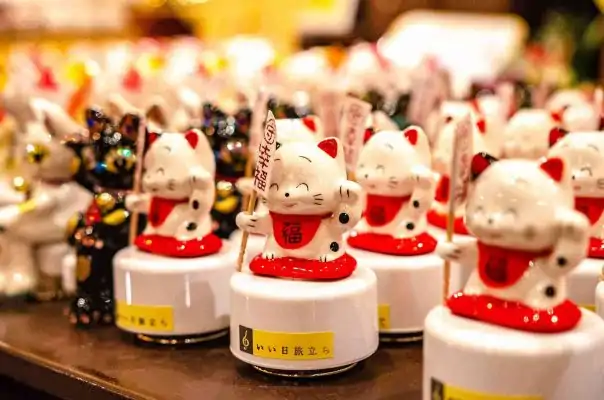
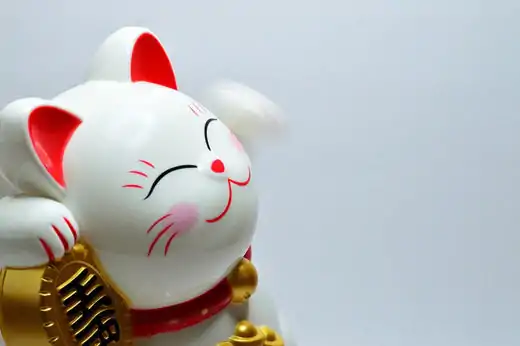
Also known as the lucky cat, the Maneki Neko is a traditional ceramic or porcelain figurine of a seated cat with one or both paws raised to ear level. Interestingly, although it is widely called the “Chinese lucky cat” today, its true origins lie in Japan, where it first appeared during the Edo period some four centuries ago. From there it spread across China and the rest of Asia, becoming one of the continent’s most recognisable symbols of good luck. So what makes this little cat so special?
What does the Maneki Neko lucky cat really mean?
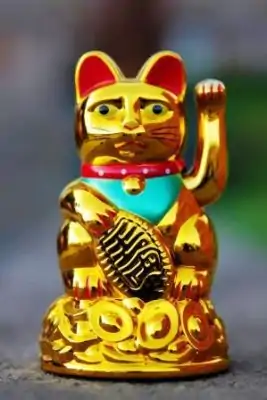
The name itself is telling: Maneki comes from the verb maneku, meaning “to invite” or “to beckon”, while neko means “cat”. And the raised paw is no random pose, each gesture carries its own message.
When the right paw is raised, the cat is said to attract money and prosperity. When the left paw is raised, it welcomes people and customers instead. A cat with both paws up offers a little of everything: fortune, visitors and protection. The higher the paw, the further away the luck it is believed to summon, and the gold coin (a koban) many of them hold only sweetens the promise of wealth.
In short, the Maneki Neko is there to fill its owner’s pockets and bring lasting prosperity to the household.
Where should you place a lucky cat?
Always on the lookout for new ways to attract luck, people across Asia treasure the porcelain Maneki Neko. Tradition holds that it should sit inside a shop to draw in fortune, a cat that invites good people, and good things, to step through the door.
Its colour matters just as much as its pose. A tricolour (calico) cat is considered the luckiest of all; gold calls in wealth, white stands for purity and happiness, black wards off evil spirits, and red is said to protect health. Choosing one is a little like choosing the kind of luck you wish to invite home.
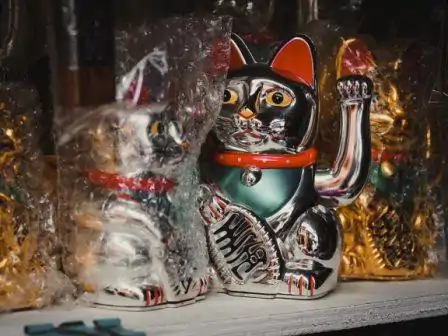
A genuine good-luck charm, born in Japan.
A Maneki Neko can be placed almost anywhere, but you will most often find it on the cash register or counter of a shop, greeting customers as they arrive. The most famous legend behind it is set at Gōtoku-ji temple in Tokyo: a passing lord, sheltering from a storm, noticed a cat beckoning him toward the temple gate. He followed it, and moments later lightning struck the very spot where he had been standing. Grateful, he became the temple’s patron, and ever since the beckoning cat has been honoured as a bringer of luck and a guardian against misfortune.
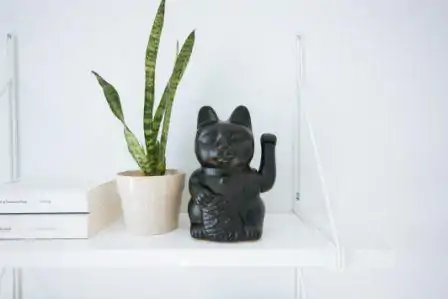
The lucky cat at home, not just in the shop.
The power of the Maneki Neko reaches far beyond the counter. In Japanese and Chinese homes alike, it is given pride of place somewhere prominent, on a shelf, by the entrance or in the living room, so that family and guests can see it clearly and share in its good fortune.
There is no harm in keeping several, either; each one is believed to attract a little more luck. Some families place a money-drawing cat by the safe or cash box and a customer-welcoming one near the door. Modern versions even wave their paw all day long, powered by a small battery or a solar cell, so the beckoning never stops.
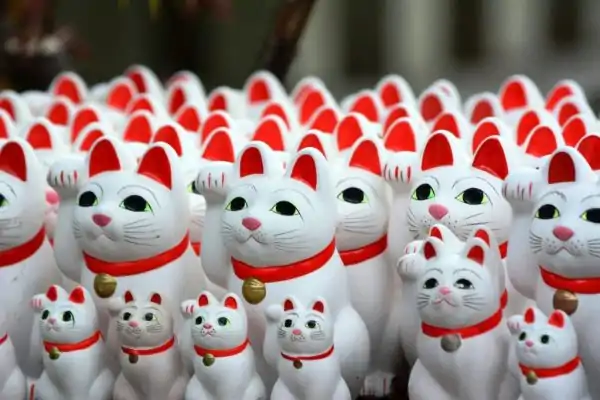
The Maneki Neko as decoration
Just as Feng Shui is about arranging the rooms of a home in harmony, the Maneki Neko is an ornamental object the Chinese hold dear. It comes in many forms to suit every taste: large or small, in the Japanese or Chinese style, in classic porcelain or playful modern finishes.
You will even find all sorts of spin-offs inspired by the Chinese lucky cat: phone accessories, tea sets, money boxes, bowls, plush toys, handbags, chopsticks, clothing of every kind, plates, cups, and so on. There really is a lucky cat for every corner of your life.
Wherever you are, this good-luck charm is there to bring you fortune.
Today the fame of the Maneki Neko reaches far beyond Asia. As much a true lucky charm as a decorative piece, it has won admirers the world over, and some people even collect them.